✨ New Arrivals Just Dropped!Explore

Boeing YC-14
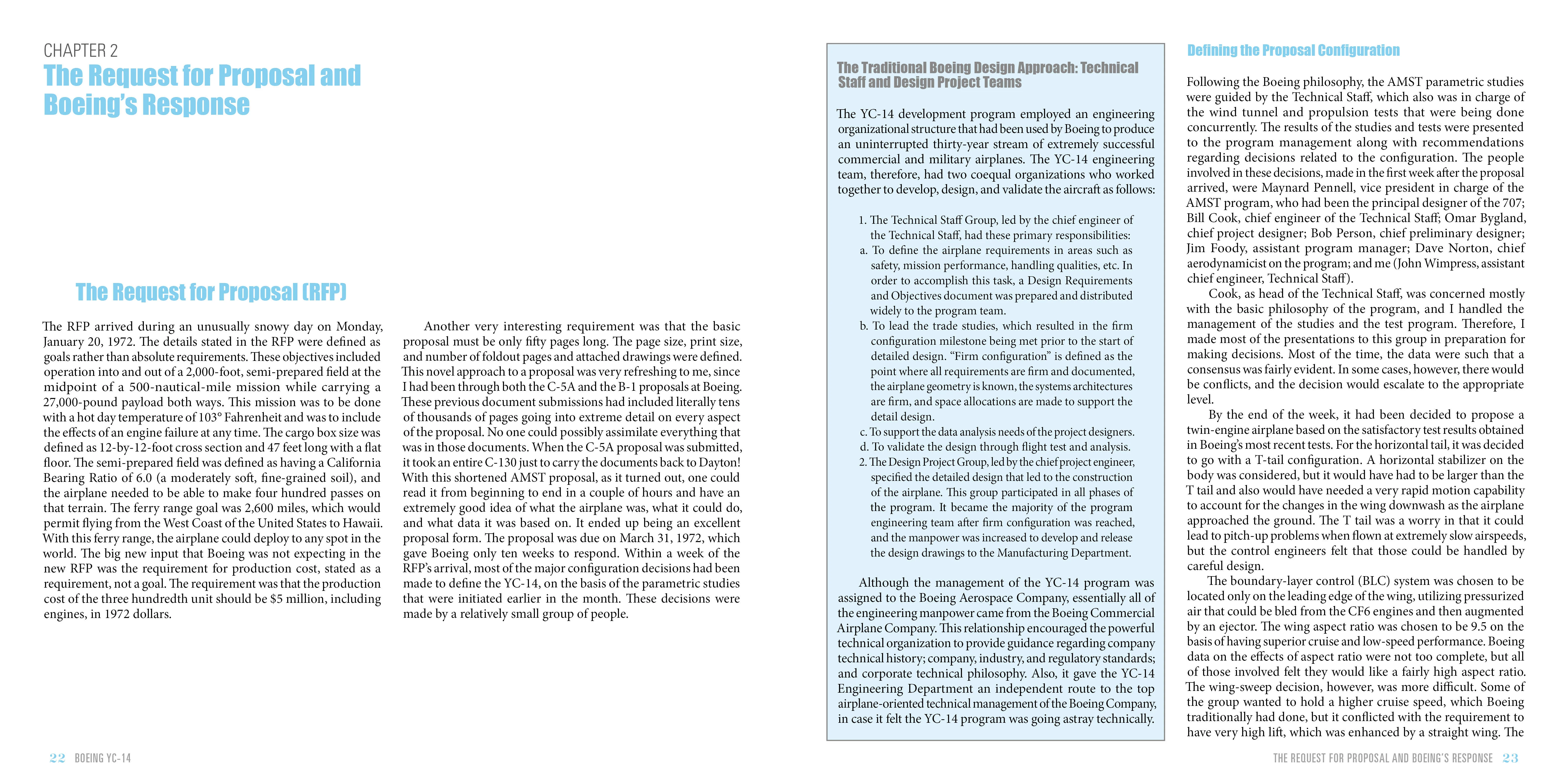
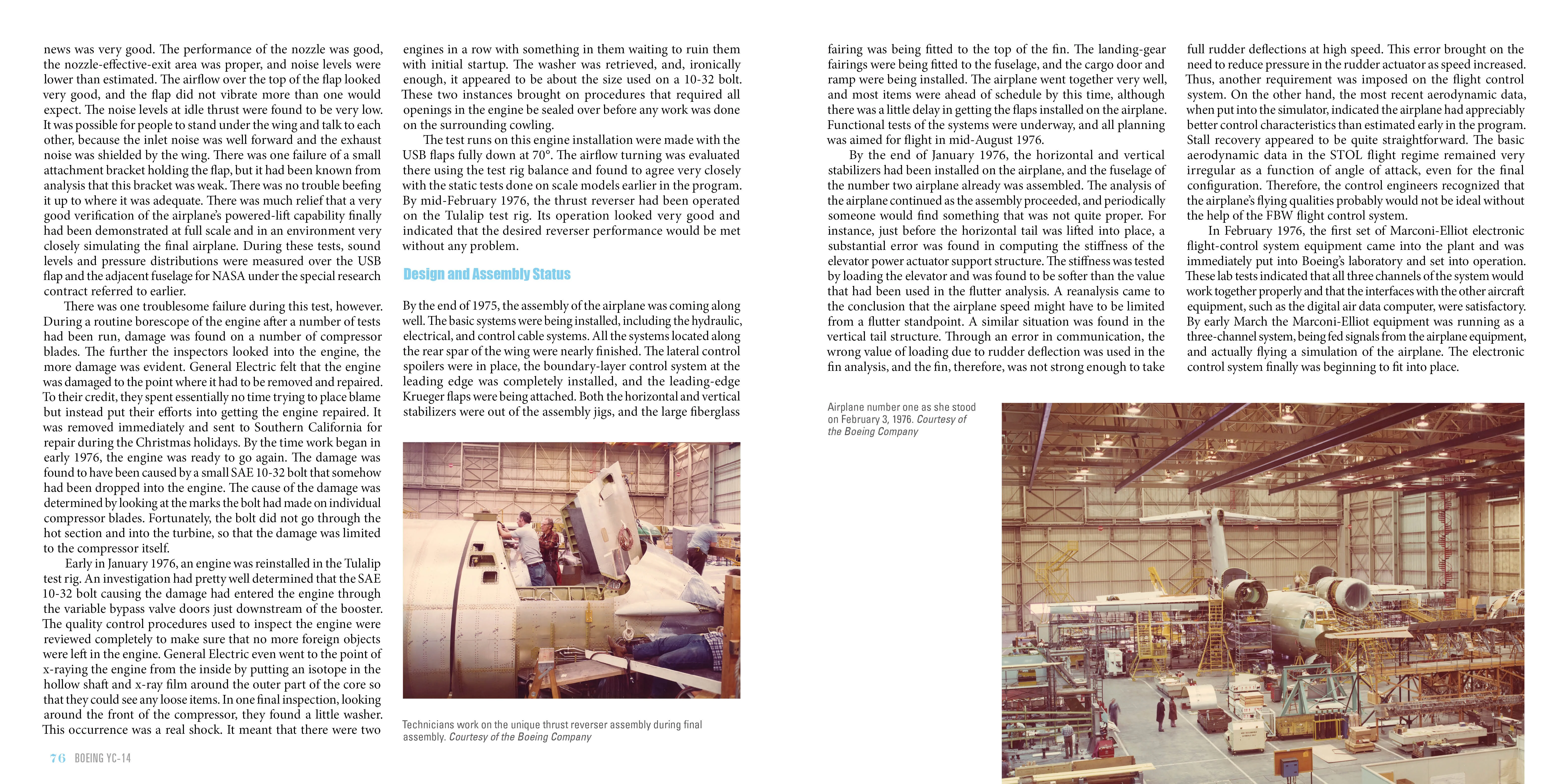
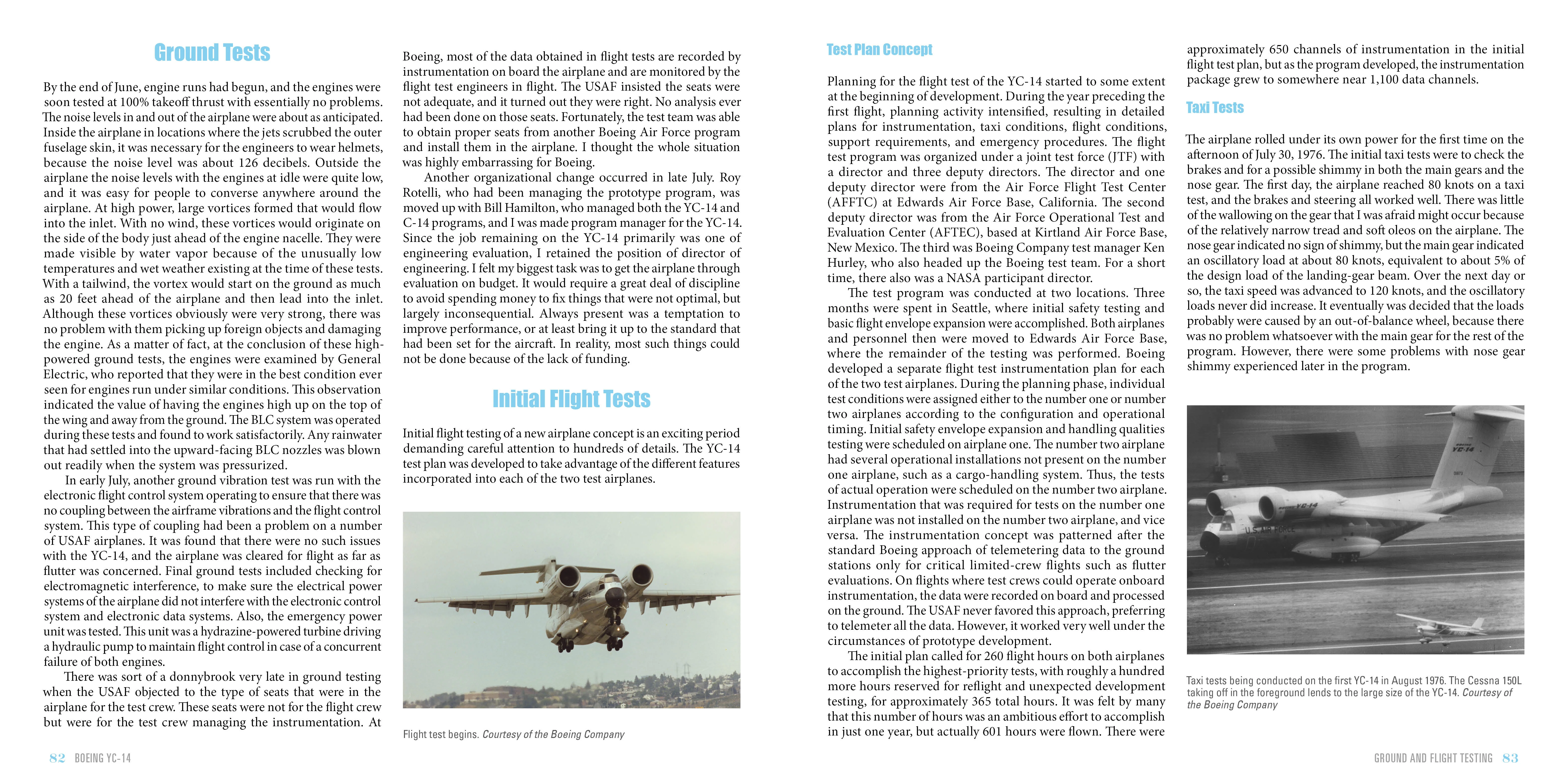
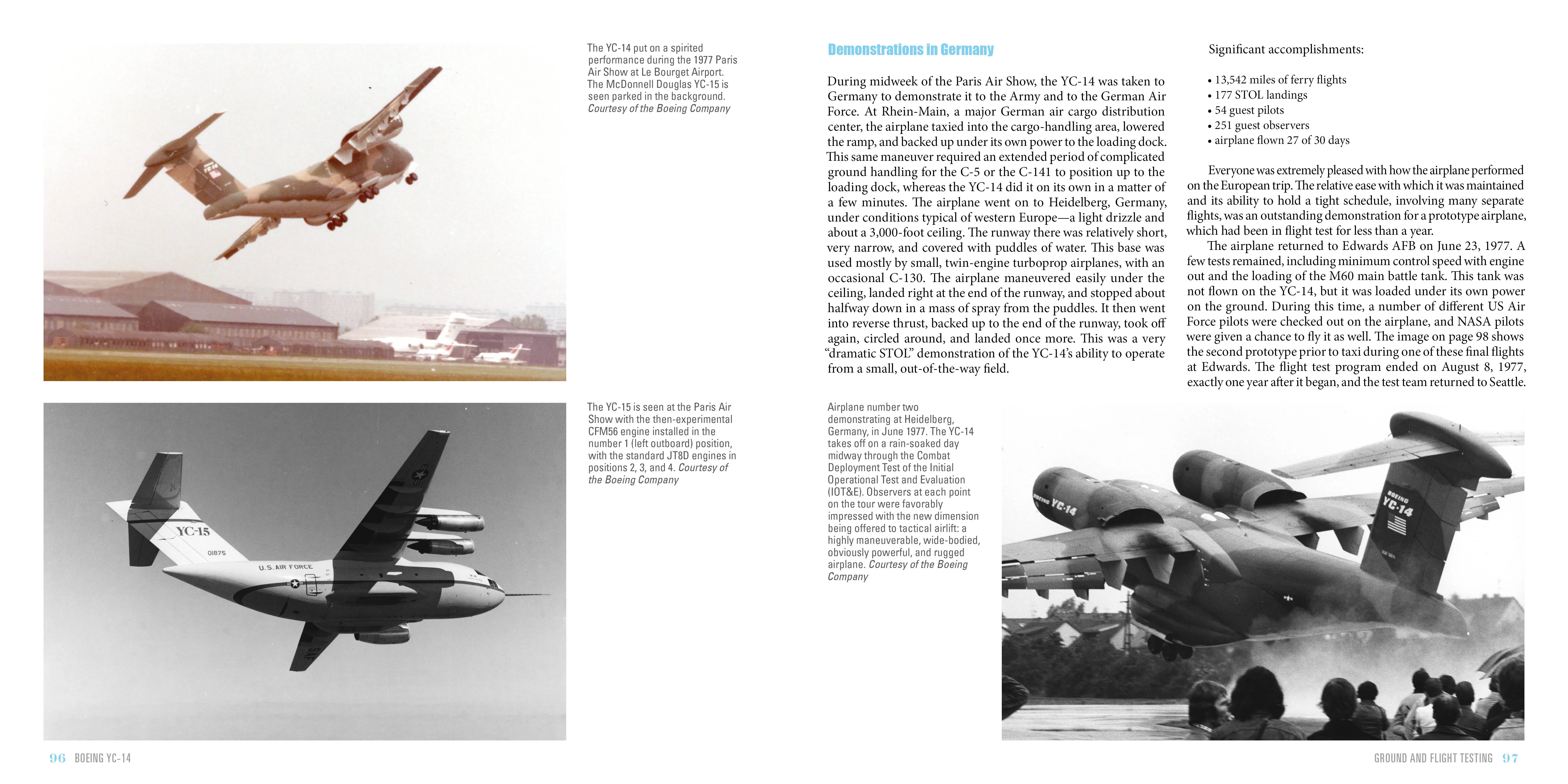
The Boeing YC-14, being first flown in 1976, was an impressive aeronautical achievement.
This aircraft signaled many firsts in aircraft design, the most prominent being the use of upper-surface blowing (which turned the jet engine flow downward), combined with boundary-layer control, to allow flight at amazingly low airspeeds.
The YC-14 program management consistently embraced new technologies, such as the use of “fly-by-light” flight controls and use of digital airframe design—technologies that would later become mainstream for Boeing.
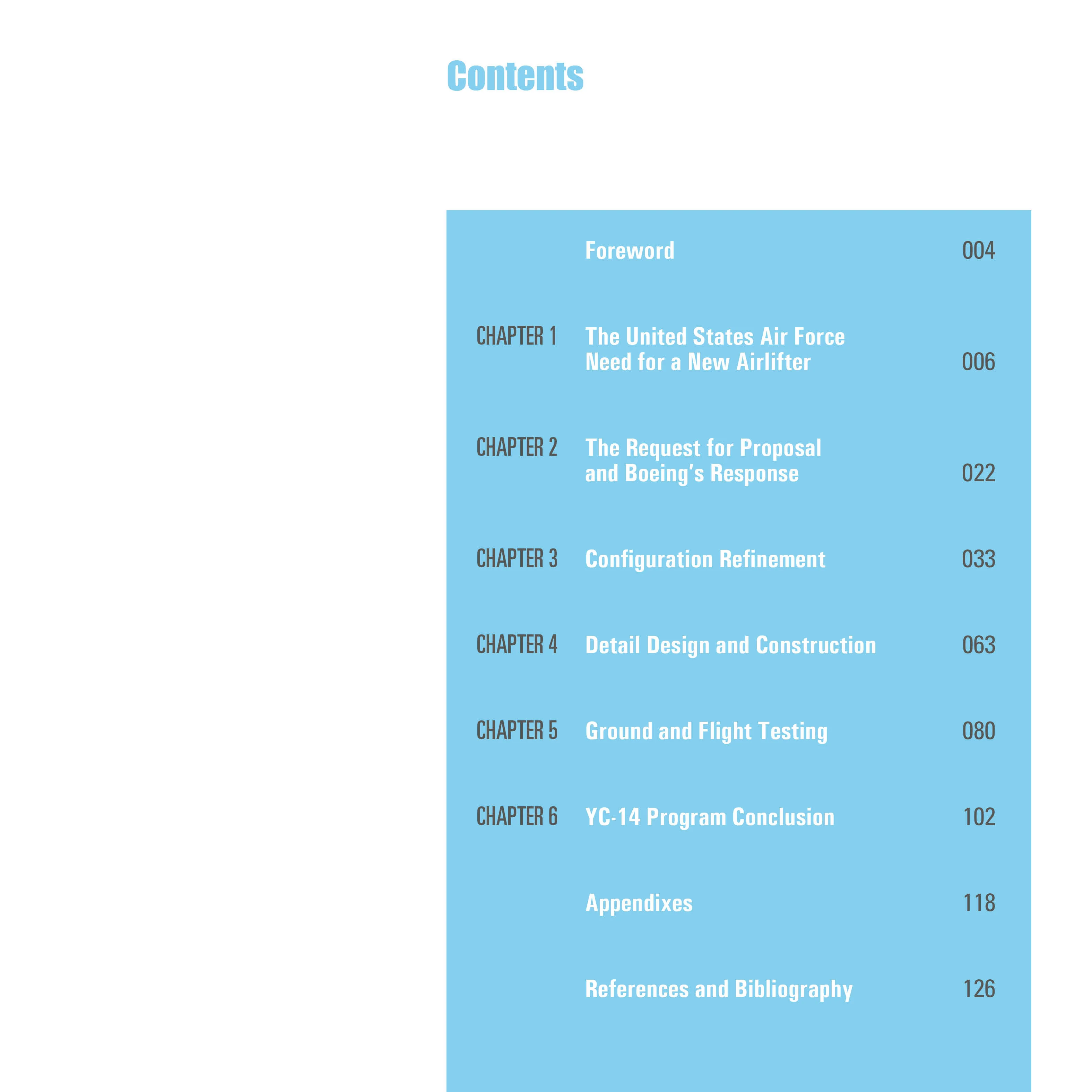
Although this book is about a specific airplane type, it is just as much about the YC-14 design team that created a multiorganizational culture, unafraid to “draw outside the lines,” to create a dramatically capable airplane.
To place the reader in the pilot’s seat, Boeing and Air Force test pilots provide their reflections of the handling and performance of the YC-14.
Equally intriguing, the challenges of designing a new airplane from start to finish are explored in detail.[AuthorName]By John K. Wimpress[/AuthorName][AuthorBio]John Wimpress, Boeing aerodynamicist and airplane designer, was involved with the design of most of Boeing’s jet airplanes from the Air Force B-47 to the commercial 757. John was director of engineering on the US Air Force YC-14 STOL transport. He lives in Des Moines, Washington.[/AuthorBio][NumIllustration]145 color and b/w photos[/NumIllustration][CoAuthor][/CoAuthor][SubTitle]US Air Force Experimental STOL Aircraft[/SubTitle][ColorPattern]145 color and b/w photos[/ColorPattern]
This aircraft signaled many firsts in aircraft design, the most prominent being the use of upper-surface blowing (which turned the jet engine flow downward), combined with boundary-layer control, to allow flight at amazingly low airspeeds.
The YC-14 program management consistently embraced new technologies, such as the use of “fly-by-light” flight controls and use of digital airframe design—technologies that would later become mainstream for Boeing.
Although this book is about a specific airplane type, it is just as much about the YC-14 design team that created a multiorganizational culture, unafraid to “draw outside the lines,” to create a dramatically capable airplane.
To place the reader in the pilot’s seat, Boeing and Air Force test pilots provide their reflections of the handling and performance of the YC-14.
Equally intriguing, the challenges of designing a new airplane from start to finish are explored in detail.[AuthorName]By John K. Wimpress[/AuthorName][AuthorBio]John Wimpress, Boeing aerodynamicist and airplane designer, was involved with the design of most of Boeing’s jet airplanes from the Air Force B-47 to the commercial 757. John was director of engineering on the US Air Force YC-14 STOL transport. He lives in Des Moines, Washington.[/AuthorBio][NumIllustration]145 color and b/w photos[/NumIllustration][CoAuthor][/CoAuthor][SubTitle]US Air Force Experimental STOL Aircraft[/SubTitle][ColorPattern]145 color and b/w photos[/ColorPattern]
$8.75
Original: $24.99
-65%Boeing YC-14—
$24.99
$8.75
Description
The Boeing YC-14, being first flown in 1976, was an impressive aeronautical achievement.
This aircraft signaled many firsts in aircraft design, the most prominent being the use of upper-surface blowing (which turned the jet engine flow downward), combined with boundary-layer control, to allow flight at amazingly low airspeeds.
The YC-14 program management consistently embraced new technologies, such as the use of “fly-by-light” flight controls and use of digital airframe design—technologies that would later become mainstream for Boeing.
Although this book is about a specific airplane type, it is just as much about the YC-14 design team that created a multiorganizational culture, unafraid to “draw outside the lines,” to create a dramatically capable airplane.
To place the reader in the pilot’s seat, Boeing and Air Force test pilots provide their reflections of the handling and performance of the YC-14.
Equally intriguing, the challenges of designing a new airplane from start to finish are explored in detail.[AuthorName]By John K. Wimpress[/AuthorName][AuthorBio]John Wimpress, Boeing aerodynamicist and airplane designer, was involved with the design of most of Boeing’s jet airplanes from the Air Force B-47 to the commercial 757. John was director of engineering on the US Air Force YC-14 STOL transport. He lives in Des Moines, Washington.[/AuthorBio][NumIllustration]145 color and b/w photos[/NumIllustration][CoAuthor][/CoAuthor][SubTitle]US Air Force Experimental STOL Aircraft[/SubTitle][ColorPattern]145 color and b/w photos[/ColorPattern]
This aircraft signaled many firsts in aircraft design, the most prominent being the use of upper-surface blowing (which turned the jet engine flow downward), combined with boundary-layer control, to allow flight at amazingly low airspeeds.
The YC-14 program management consistently embraced new technologies, such as the use of “fly-by-light” flight controls and use of digital airframe design—technologies that would later become mainstream for Boeing.
Although this book is about a specific airplane type, it is just as much about the YC-14 design team that created a multiorganizational culture, unafraid to “draw outside the lines,” to create a dramatically capable airplane.
To place the reader in the pilot’s seat, Boeing and Air Force test pilots provide their reflections of the handling and performance of the YC-14.
Equally intriguing, the challenges of designing a new airplane from start to finish are explored in detail.[AuthorName]By John K. Wimpress[/AuthorName][AuthorBio]John Wimpress, Boeing aerodynamicist and airplane designer, was involved with the design of most of Boeing’s jet airplanes from the Air Force B-47 to the commercial 757. John was director of engineering on the US Air Force YC-14 STOL transport. He lives in Des Moines, Washington.[/AuthorBio][NumIllustration]145 color and b/w photos[/NumIllustration][CoAuthor][/CoAuthor][SubTitle]US Air Force Experimental STOL Aircraft[/SubTitle][ColorPattern]145 color and b/w photos[/ColorPattern]