Traditional Japanese Woodworking
Traditional Japanese joinery, commonly used in building and furniture construction, requires no hardware, nails, or glue; instead, the wood is skillfully fit together with simple hand tools and a meditative focus. In this volume, master craftsman Takami Kawai guides you through techniques used by Japanese woodworkers for millennia. Readers will gain a thorough understanding of the principles of Japanese joinery, mastering its core tools and techniques with confidence.
Discover the types of wood used in Japanese woodcraft and how to set up, sharpen, use, and store the proper tools for the job. Explore 10 main techniques:
- Watariago (a lap joint connecting two intersecting beams)
- Hozo and Hozo Ana (a connecting joint with mortise and tenon)
- Ari Shiguchi (an intersecting dovetail joint)
- Koshikake Ari Tsugi (a stepped, lengthening splice joint using a dovetail)
- Kama Tsugi (a gooseneck splice joint used to connect beams)
- Shachi Tsugi (a keyed splice joint connecting beams)
- Okkake-Daisen Tsugi (a durable splice joint)
- Kanawa Tsugi (a strong lengthening splice joint)
- Dai-Mochi Tsugi (a lengthening splice joint)
- Okuri Ari (a connecting, sliding dovetail joint)
Once you’ve mastered the techniques, you can apply them to endless constructions, lending handmade charm and generations of use to each piece you make.
[AuthorName]By Takami Kawai[/AuthorName][AuthorBio]Takami Kawai is the owner of "Suikoushya," a design and construction firm based in Kyoto, Japan. He specializes in wooden architecture. Through his Craft School, Takami also organizes talks, events, and workshops relating to traditional Japanese carpentry, woodworking, and tools.https://suikoushya.com/
[/AuthorBio][NumIllustration]150+ color photos[/NumIllustration][CoAuthor][/CoAuthor][SubTitle]Mastering the Timeless Art of Joinery[/SubTitle][ColorPattern]150+ color photos[/ColorPattern]Original: $29.99
-65%$29.99
$10.50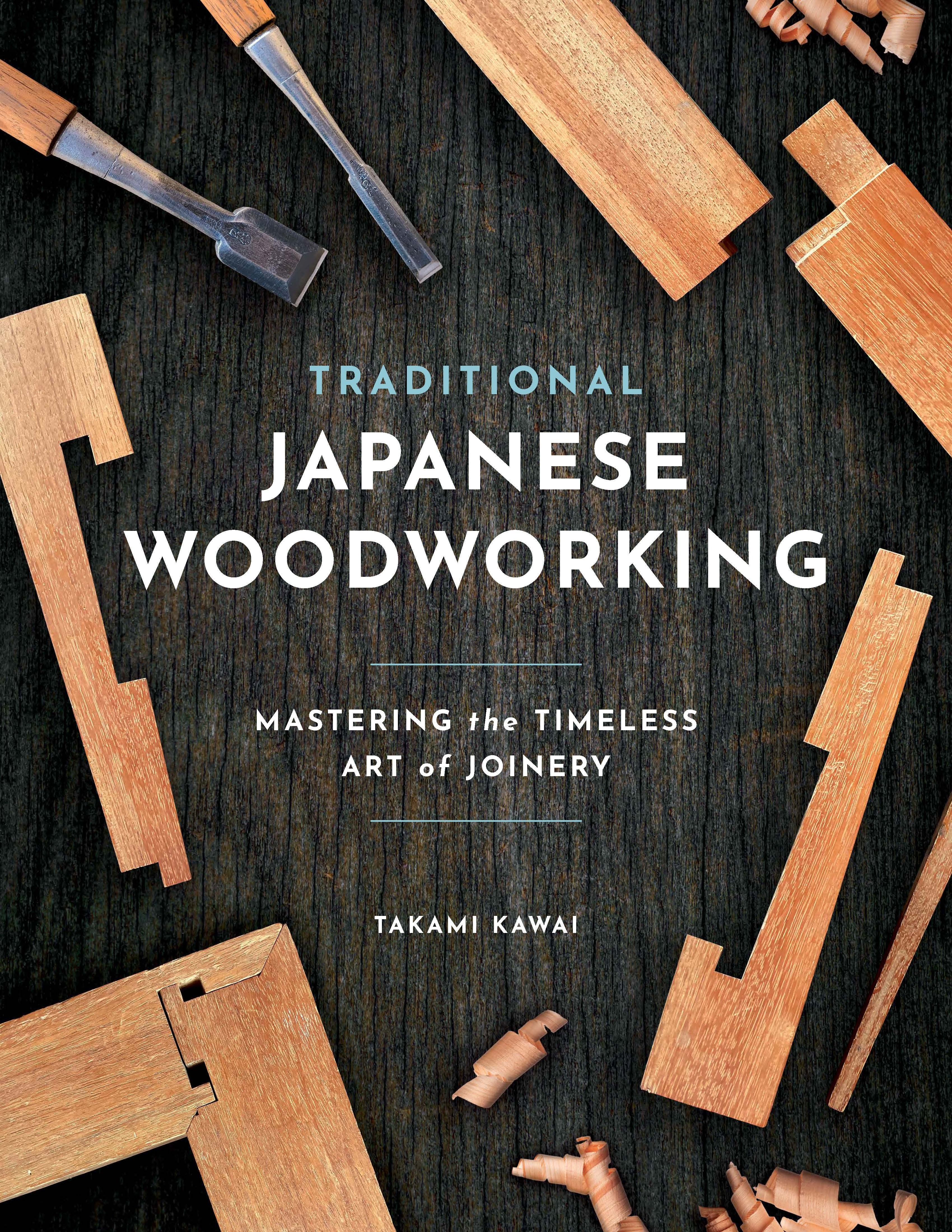
Description
Traditional Japanese joinery, commonly used in building and furniture construction, requires no hardware, nails, or glue; instead, the wood is skillfully fit together with simple hand tools and a meditative focus. In this volume, master craftsman Takami Kawai guides you through techniques used by Japanese woodworkers for millennia. Readers will gain a thorough understanding of the principles of Japanese joinery, mastering its core tools and techniques with confidence.
Discover the types of wood used in Japanese woodcraft and how to set up, sharpen, use, and store the proper tools for the job. Explore 10 main techniques:
- Watariago (a lap joint connecting two intersecting beams)
- Hozo and Hozo Ana (a connecting joint with mortise and tenon)
- Ari Shiguchi (an intersecting dovetail joint)
- Koshikake Ari Tsugi (a stepped, lengthening splice joint using a dovetail)
- Kama Tsugi (a gooseneck splice joint used to connect beams)
- Shachi Tsugi (a keyed splice joint connecting beams)
- Okkake-Daisen Tsugi (a durable splice joint)
- Kanawa Tsugi (a strong lengthening splice joint)
- Dai-Mochi Tsugi (a lengthening splice joint)
- Okuri Ari (a connecting, sliding dovetail joint)
Once you’ve mastered the techniques, you can apply them to endless constructions, lending handmade charm and generations of use to each piece you make.
[AuthorName]By Takami Kawai[/AuthorName][AuthorBio]Takami Kawai is the owner of "Suikoushya," a design and construction firm based in Kyoto, Japan. He specializes in wooden architecture. Through his Craft School, Takami also organizes talks, events, and workshops relating to traditional Japanese carpentry, woodworking, and tools.https://suikoushya.com/
[/AuthorBio][NumIllustration]150+ color photos[/NumIllustration][CoAuthor][/CoAuthor][SubTitle]Mastering the Timeless Art of Joinery[/SubTitle][ColorPattern]150+ color photos[/ColorPattern]